There are many people that have inspired me, but for this I am going to stay close to home. I have included a photo of my mum’s goth Birthday a couple of years ago, 4 generations of family. Mum was a nurse in A&E at a local hospital Friday, Saturday and Sunday nights for much of our childhood. In 1991 when I told my mum of the diagnosis she hugged me and said, ‘Never mind, just live life as healthy as possible’. When I told my sister, she made it clear that there would be no rejection; in fact, she encouraged a closeness with my nieces, including bathing together when they were little. The unwavering support and love given to me by family and friends alike meant that I did not need to worry about stigma and could be open about living with HIV.
I’ve included a photograph of me and my friend Karen in Sri Lanka. We are standing at the top of Sigiriya following a terrifying climb up. We met when I was 19 and are still besties.
There is a cactus like me; it’s prickly but succulent. They thrive in harsh conditions and are notoriously hard to kill. They make good house plants, if you don’t mind the odd prick or two, but as they get older, every knock, scratch or blemish stays with them, so they can look a bit rough around the edges. The wild ones though, they can survive for many years, hundreds of years, drinking in the night and blooming in the dark. This glass one is a contradiction, not prickly at all and a bit more fragile, but if it breaks can be mended with gold.
Kintsugi is the art of mending shattered ceramics. Repair takes time, practice, care and patience, but rather than the pieces being discarded, they are glued together and adorned with gold. The imperfection, the golden cracks, are what make the new object unique. There is no attempt to hide the damage; it is literally illuminated, reminding us to stay optimistic even when shattered or broken. It teaches that even from something seemingly broken, we can make something new; the object is transformed to possess a different sort of beauty. As a philosophy, it treats breakage and repair as part of the history of an object, a transformation rather than something to disguise. More broadly it’s the belief in embracing human flaws and celebrating the beauty of imperfection and change, whilst also recognising the beauty of human fragility. For me, it rebels against ideas of perfection and consumerism. It represents the beauty that comes with age and experience and pushes against valuing only the new and flawless.
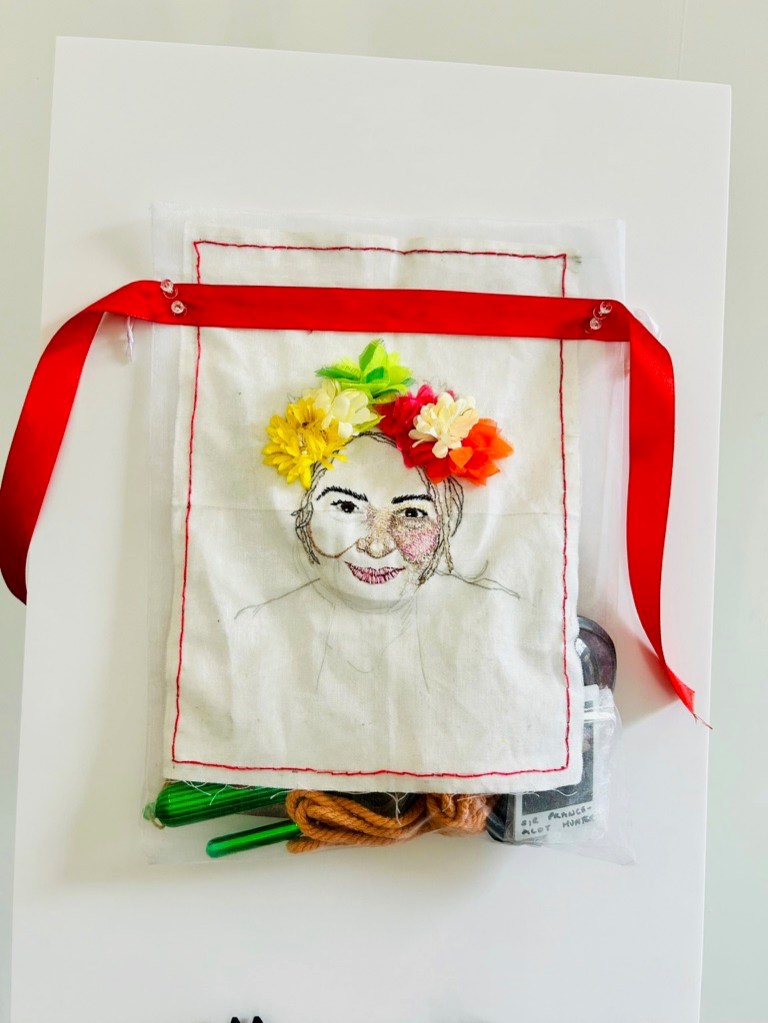
Everyone living with HIV will have different experiences, no two people are the same. Each of us is like a thread with our own experience and story. Individual threads can be difficult to see, and can easily be lost. The rope represents the entwining of the threads of our individual stories and experiences to create a collective power, get our voices heard and become more visible. The rope cannot be easily broken.
These are my swimming goggles, glasses and sunglasses. Each lens changes my view of the world. I am aware that my experiences, relationships, the people around me throughout my life have shaped me, my reality and the lens I see things through. But the way I view things is not always the way things are. The different lenses remind me not to be imprisoned by just one perspective and to challenge myself to become more conscious about the lens I am applying to the world around me so I can confront my biases and preconceptions. I seek to broaden my perspectives, so I can connect to something that transcends my own immediate experience and expands my understanding of the world, enabling change and personal growth.
 Rebel By Default